Surviving PPD: The Princess Who Saved Herself

This past weekend, I participated in a training for Mother to Mother, our free volunteer phone support program for pregnant and post-birth moms in Missouri.  One conversation which stood out for me was how surviving postpartum depression (PPD) can help us become stronger and more confident.  Not that anyone would willingly choose this, but sometimes it chooses us. 

Experiencing mild depression after my first baby, took me by surprise.  After completing my doctoral degree, getting my psychology license, and seeing 30 clients a week, I thought I could handle anything.  Certainly, motherhood couldn’t be more challenging.  How wrong I was!   

As a new mom I doubted myself about many things, including if I’d made the biggest mistake of my life.  I felt incompetent, inadequate and that I wasn’t “good enough” to be the mom my daughter deserved.   I thought sleep, self-care and sex were permanently gone.  On bad days I was convinced life as I knew it was over and I’d be trapped in motherhood hell forever. 

But gradually, the landscape changed.  Surviving the ups, downs and uncertainties of new motherhood, I emerged feeling stronger and self-assured.  More capable of meeting life’s changes.  Empowered with renewed strength and confidence.

For all moms, including those with PPD,  listen now to “The Princess Who Saved Herself.  It is a reminder and affirmation that while others may help us through  challenging and stressful times, making our way through the darkness is ultimately what saves us.
PPD Recovery and Renewal

I was listening to a mother in our postpartum support group as she described small victories; she was recovering from postpartum depression (PPD) and was feeling good about herself and how far she had come. I wondered why more women don’t celebrate recovery and victory over depression, anxiety, grief, and other emotional challenges.

A few years ago while offering phone support, one mom mentioned that after recovering from PPD, her Mother-in-law said she didn’t like who she’d become. Why was that?  What was different about her? She’d emerged a stronger, more confident woman, able to voice her needs and take care of herself.  A well-fought victory!  We laughed about her mother-in-law’s reaction and celebrated the woman she is now who is so different than when I first spoke to her.

After two personal experiences with PPD, I like the woman and mother I have become. I feel strong for fighting and winning against PPD, to date it is the most difficult thing I have experienced in my life. Now I ask for what I want and take care of my needs. I have self confidence in who I am and my abilities as a mother. That terrible experience molded me into the person I am today. Today, celebrate the woman you are becoming and have become!

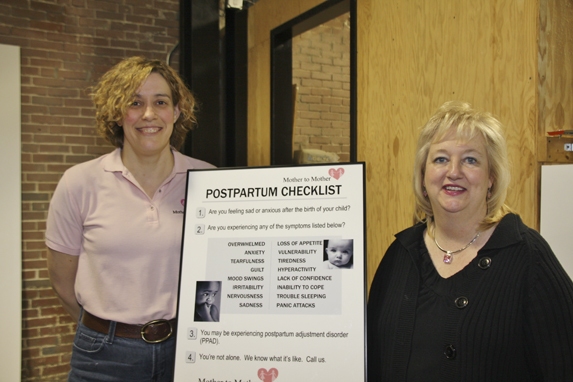
Real Moms Geralyn and Linda

Linda Meyer is the Executive Director of Mother to Mother in St. Louis, MO. Mother to Mother offers telephone and group support to women experiencing emotional difficulties during pregnancy and postpartum.

More Spring Cleaning

Here are some additional thoughts on how to renew ourselves and release old, worn thoughts and habits.  Spring cleaning from the inside out.

Discover what’s nourishing.  Just as plants need water and sunshine to grow, we need physical, emotional, and spiritual sustenance.  Start with eating healthy foods, getting regular physical activity, sleeping 8-9 hours, and taking breaks for your mind and body.  Do one thing you enjoy daily, whether it’s phoning a friend, listening to music or walking your dog.  Nurture your spirit through prayer, meditation, or communing with nature. 

Let go of un-nourishing relationships.  Being honest about admitting and detaching from relationships which aren’t good anymore can still hurt especially   ones involving family and long-term friends.  If we’ve spoken to them about what needs to be different and things haven’t changed over time, release them with love.   Clearing space for nourishing relationships to enter.

Cultivate optimism.  Looking more on the “sunny” side of life can be learned by shifting attention away from negative thoughts to more positive ones.  There are few situations which are all good or all bad.  Our great job may sour when we get a new boss.   An untimely move lead to a wonderful neighborhood with friends with love.  Prune your mind of unnecessary negativity. 

Practice gratitude

Photo by Real Mom Kim

When we feel grateful, our souls are nourished and restored.  We have a more positive attitude toward today and what lies ahead.  We feel connected to something bigger than ourselves.  Supported in the deepest sense.  Abundant and alive.

Hello, Me. Long Time No See.

Something happened when I became a mother.

I became disconnected from my thoughts, feelings and desires. With two little people depending on me, I spent my time on their needs and wants. When I wasn’t taking care of them, I shifted my attention to my work, husband and home life. Then, back to the kids.

Gone were the childfree days of college and young professional life, when I would spend hours alone, contemplating my place in the world, journaling (oh, the journals I have filled!), taking long walks in the woods, imagining life’s possibilities and going after them one by one.

As a mom, my only times alone with my thoughts have been 10 minutes in the shower or commuting to work. And guess what I was thinking? “Man, this shower feels good” or “I really hate this $#&@ing traffic.” Deep stuff.

Perhaps because my almost-5-year-old is more independent and my 19-month-old is no longer a baby, I’m now emerging from the mom-cocoon. It also helps that I work for myself, from home, with child care. As I poke my head (antennae?) out, I’m looking around saying, “What about me? What do I want?”

I’m allowing myself to move up my priority list. How do I want to spend my time? What do I want to experience or accomplish? It’s exciting to ponder these questions. I’m still a mom, with all the responsibilities and joys that come with it. But I’m also a person — who’s enjoying getting reacquainted with herself again.

Today’s author Susan is co-founder of Working Moms Against Guilt.

Motherhood is Hard Work So Cut Yourself Some Slack!

The media creates images of perfect mothers such as June Cleaver and Claire Huxtabel. TV moms look perfect, have spotless homes, and great relationships. Magazine covers portray moms holding beautiful babies, breastpumps and briefcases who are perfectly made up.  From such images women define their “shoulds” and “musts”creating unattainable standards of perfection and judging themselves for not keeping up.

The truth is that motherhood is hard work. As women become mothers and face the accompanying stressors and challenges, they often internalize their  inability to cope flawlessly as personal failings.  Add sleepless nights and fussy babies and it’s not hard to see why mothers lose confidence. When the idealized view of one’s self and motherhood collides with reality, they criticize themselves rather than recognizing how well they are doing given the endless expenditure of physical, emotional and mental energy that goes into caring for children.  Pretty amazing!

Nuclear families encourage isolation, especially in the early days postpartum. Experienced mothers rarely discuss hardships inherent in mothering.  No one wants to admit they felt less than adequate, irritable, anxious or depressed maneuvering new motherhood while this is true.  Although the internet provides some connection, many moms lack the  face-to-face support needed to see that everyone faces challenges and make mistakes.  Supporting themselves and each other by acknowledging that motherhood is hard work and that perfection must be tempered by reality  is what’s needed.

So, starting today cut yourself and the moms around you some slack.  You’ve earned it.  You deserve it!

Jamie Bodily is founder and director of ParentsCount which provides birth and postpartum doula services, childbirth education and counseling

Spring Is In the Air: Time for Emotional Cleaning

Spring is in the air.   As the days get longer and the weather warms, we feel a growing urge to refresh and renew our lives.  The blossoming season brings with it the opportunity to release what we’ve held on to mentally or emotionally, which no longer fits.  Spring cleaning indeed.

Clearing away old beliefs.  Just like our physical space, our minds are often cluttered with wornout beliefs and ideas.  In cognitive therapy, clients learn to monitor their negative beliefs and refute them.  If someone grew up being criticized, they may have the belief “I’m no good”.  As an adult however, they may have a successful career or be a caring parent, evidence that this belief is not true.  Changing automatic assumptions is empowering and liberating. 

Sow the seeds of intention: Step One.  Along with releasing negative thoughts, we must clarify what we want.  Why is this challenging?  First, our minds  chatter constantly over urgent but not important matters.  Like what we said that offended someone we hardly know or putting the laundry away.  Instead, we need to quiet our “monkey mind” through prayer, meditation and relaxation.   Stillness allows connection with our deeper selves.

Sow the seeds of intention: Step Two.  When our mind is still, we see more clearly how we want to live.  Then during our daily meditation/prayer, we can set our intentions for serenity, peaceful relationships, health, etc., allowing our intention and energy to flow in the direction we desire.  Creating the life we want one day at a time.

It’s Okay to Speak Up, Really (Part 3)

Here are the final four steps in assertive communication.  Hopefully, these will  help with both speaking up and listening.

  1. Provide clarification.  If the receiver doesn’t understand what you’re saying, clarify it.  However,  just because you say things clearly, doesn’t mean that’s how they’ll be heard.  If problems persist, make certain that you’re communicating openly and non-defensively and suggest resuming the conversation later if you want.
  2. Create a new opportunity.  As long as we’re alive, we can have a follow-up or “recovery conversation” when we’re not satisfied with a prior outcome.  First, all parties must agree to this.  Next, remember that each person is responsible for approaching the “recovery” conversation in an open-minded, non-defensive way intending to listen and be heard.  With this goal,  everyone wins.
  3. Ending the conversation.  If the other person becomes attacking or abusive, it’s time to stop. If you want, you can offer to have a “recovery conversation” later.  Whatever the choice, it’s yours.  Being assertive doesn’t  mean tolerating abusive behavior or language.  It does mean standing up for yourself and setting limits.     
  4.  Be clear about your intentions.  Assertivenes requires admitting to yourself whether you’re genuinely interested in open and honest communication or proving you’re right and other self-serving motives.  If intentions aren’t aligned with what’s best for the relationship , you won’t succeed.  When aligned, there are limitless possibilities for positive results.

Next week we’ll be discussing the new 7-week self-care challenge starting March 21.  If you participated in our October 21-day self-care challenge, we’d appreciate your comments and ideas on how to improve your experience.

It’s Okay to Speak Up, Really (Part 2)

Last week, we posted the first three aspects of assertive communication: 1)speak openly, honestly and directly; 2)state thoughts and feelings without becoming defensive; and 3)be courteous and respectful.  Here are the next four steps.

  1.  Exercise timing.  Discuss important matters at a time which is good for all involved.  Discussions late at night when your partner’s tired or first thing in the morning before they’re fully awake, is not recommended.   Make certain you each have the attention and energy for a constructive conversation. 
  2. Make clear requests.  If there’s something you want, ask for it.  Don’t expect others to read your mind.  Relationship problems often occur when we don’t take responsibility for expressing our needs.  Real intimacy is being able to say what’s on your mind.
  3. Speak from your heart.  Make your intention to have a “confiding” conversation even if you feel angry or hurt.  Use “I” statements like “I felt angry when I thought you weren’t listening.”  Don’t blame or demean the other person.  This sets the tone for them to do the same.   Whatever they do, practice assertive communication.
  4. Provide clarification.  If the receiver doesn’t understand what’s said, offer clarification or restate it.  However, even when things are stated clearly, it doesn’t mean that’s how they’ll be heard.  Each of us filters what we hear through the lens with which we see the world.

While the goal of assertive communication is to better understand each other, its success is not gaurunteed.  Still, it is up to us to create the opportunity for this to occur by communicating assertively.

Healthy Relationships: A Must for Self-Care

Cultivating healthy relationships and eliminating harmful ones is essential to proper self-care.  Whether it’s with a spouse, child, parent, sibling, friend or co-worker, a healthy relationship is one that is characterized by RESPECT- for us and the other person.

This includes:

  1. Courtesy – Be polite. Follow through. Be on time. Avoid shouting, insults, nagging, and manipulation.
  2. Boundaries- It’s okay to set limits, to say “no,” and to expect respect. Honor the other’s personal limits as well.
  3. Personal safety- Violence is NEVER justified or okay. Everyone has a right to be safe from physical and/or emotional abuse.
  4. Honesty- Deception and lies hurt both parties.  The truth always comes to light. Trust is easy to keep but almost impossible to repair.
  5. Clear communication- Say what you mean. Don’t expect others to read your mind. If you are unsure about what someone means, ask questions.
  6. Realistic expectations- Consider the other person’s role and the limits of that role.  Don’t expect the same intimacy from co-workers as spouses.  Even if the other person doesn’t like what’s said, we are each responsible for our own happiness. 
  7. Flexibility and understanding- Plans change. People disappoint. Life is a moving target.  Learn to adapt and adjust.
  8. Grace- No one is perfect. Sometimes we have to forgive and overlook shortcomings.  Other times, we must ask for forgiveness.
Mommie Kate


Good relationships (including with ourselves) are treasures. They must be nurtured.  Make time for them. Cherish them. Enjoy them.

Today’s author is Mommie Kate.  Visit her at http://faith4moms.blogspot.com/.

It’s Okay to Speak Up to Your Children, Too!

In my grandmother’s generation, “children were to be seen but not heard.”  Only parents/adults deserved respect.  Next, parents learned to “listen so their children/teens would talk,” but still expected respect from them.  Today, it seems that many children and teens openly disrespect their parents, and we allow it.

What’s happened?  When did we start worrying more about our children’s love and approval than teaching them to be considerate and thoughtful?  A few months ago one mom told me that she was so hurt by her three year-old yelling at her “I hate you,” she collapsed in a puddle on the floor.   Another mom related how her 10 year-old screamed at her for opening the room to her door without knocking so she apologized.  The problem is not that these situations occur, but that we don’t assert ourselves and use reasonable consequences because we’re afraid of how our children will respond. 

Like all moms, I know how hard it is to speak up and enforce limits.  But I learned that although I felt bad , it was more it was more important to teach my daughters  RESPECT than be their friend or fear their disapproval.  I treated them respectfully and expected the same.

When my younger daughter yelled at me, I warned her once and sent her to her room.  When my older daughter wouldn’t listen, we didn’t go to the mall that day.  While they didn’t like it then, now they value respect, consideration and courtesy in their relationships.  We joke about my younger daughter running from me saying, “No more consequences.”

SPEAK UP.  It works.