A Shout Out to All Moms

This is one of our favorite videos about motherhood.  Since Wednesday’s post was on loosening the bonds of self-criticism, it seemed fitting to consider all the things that moms do each day which go unrecognized.  It’s exhausting to think about but deserving of our attention.

Instead of putting ourselves down, we need to remember to pat ourselves on the back whether anyone else does.  To appreciate all our hard work which keeps our families going.  But it’s Friday, so for now have fun with this YouTube video and take some me-time this weekend.

PPD Recovery and Renewal

I was listening to a mother in our postpartum support group as she described small victories; she was recovering from postpartum depression (PPD) and was feeling good about herself and how far she had come. I wondered why more women don’t celebrate recovery and victory over depression, anxiety, grief, and other emotional challenges.

A few years ago while offering phone support, one mom mentioned that after recovering from PPD, her Mother-in-law said she didn’t like who she’d become. Why was that?  What was different about her? She’d emerged a stronger, more confident woman, able to voice her needs and take care of herself.  A well-fought victory!  We laughed about her mother-in-law’s reaction and celebrated the woman she is now who is so different than when I first spoke to her.

After two personal experiences with PPD, I like the woman and mother I have become. I feel strong for fighting and winning against PPD, to date it is the most difficult thing I have experienced in my life. Now I ask for what I want and take care of my needs. I have self confidence in who I am and my abilities as a mother. That terrible experience molded me into the person I am today. Today, celebrate the woman you are becoming and have become!

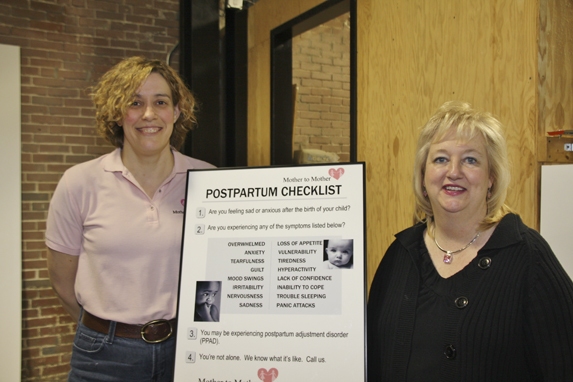
Real Moms Geralyn and Linda

Linda Meyer is the Executive Director of Mother to Mother in St. Louis, MO. Mother to Mother offers telephone and group support to women experiencing emotional difficulties during pregnancy and postpartum.

Hello, Me. Long Time No See.

Something happened when I became a mother.

I became disconnected from my thoughts, feelings and desires. With two little people depending on me, I spent my time on their needs and wants. When I wasn’t taking care of them, I shifted my attention to my work, husband and home life. Then, back to the kids.

Gone were the childfree days of college and young professional life, when I would spend hours alone, contemplating my place in the world, journaling (oh, the journals I have filled!), taking long walks in the woods, imagining life’s possibilities and going after them one by one.

As a mom, my only times alone with my thoughts have been 10 minutes in the shower or commuting to work. And guess what I was thinking? “Man, this shower feels good” or “I really hate this $#&@ing traffic.” Deep stuff.

Perhaps because my almost-5-year-old is more independent and my 19-month-old is no longer a baby, I’m now emerging from the mom-cocoon. It also helps that I work for myself, from home, with child care. As I poke my head (antennae?) out, I’m looking around saying, “What about me? What do I want?”

I’m allowing myself to move up my priority list. How do I want to spend my time? What do I want to experience or accomplish? It’s exciting to ponder these questions. I’m still a mom, with all the responsibilities and joys that come with it. But I’m also a person — who’s enjoying getting reacquainted with herself again.

Today’s author Susan is co-founder of Working Moms Against Guilt.

Motherhood is Hard Work So Cut Yourself Some Slack!

The media creates images of perfect mothers such as June Cleaver and Claire Huxtabel. TV moms look perfect, have spotless homes, and great relationships. Magazine covers portray moms holding beautiful babies, breastpumps and briefcases who are perfectly made up.  From such images women define their “shoulds” and “musts”creating unattainable standards of perfection and judging themselves for not keeping up.

The truth is that motherhood is hard work. As women become mothers and face the accompanying stressors and challenges, they often internalize their  inability to cope flawlessly as personal failings.  Add sleepless nights and fussy babies and it’s not hard to see why mothers lose confidence. When the idealized view of one’s self and motherhood collides with reality, they criticize themselves rather than recognizing how well they are doing given the endless expenditure of physical, emotional and mental energy that goes into caring for children.  Pretty amazing!

Nuclear families encourage isolation, especially in the early days postpartum. Experienced mothers rarely discuss hardships inherent in mothering.  No one wants to admit they felt less than adequate, irritable, anxious or depressed maneuvering new motherhood while this is true.  Although the internet provides some connection, many moms lack the  face-to-face support needed to see that everyone faces challenges and make mistakes.  Supporting themselves and each other by acknowledging that motherhood is hard work and that perfection must be tempered by reality  is what’s needed.

So, starting today cut yourself and the moms around you some slack.  You’ve earned it.  You deserve it!

Jamie Bodily is founder and director of ParentsCount which provides birth and postpartum doula services, childbirth education and counseling

Beyond Self-Care: Hope for Postpartum Depression

Sometimes all a mom needs is hope. When buried under the despair of postpartum depression (PPD) or anxiety, it’s hard to imagine a light at the end of the tunnel. The doctor might tell you it’s there, but you don’t see it.

You need proof.

Since there’s no crystal ball to show you the happiness you’ll regain, you have
to get the proof another way. You have to talk to moms who have been there,
living examples of a full recovery from PPD. They exist. In fact, they are
everywhere.

I love connecting moms to others who have been down the same road.  Nearly one million women suffer from perinatal mood and anxiety disorders like PPD, and I want them to know they are not alone and that they will get better.   I’ve seen many times that all it takes is a few words from a mom who has been there to a mom with PPD, who’s feeling isolated and lost, to realize help is available and that she is worth it.

 To offer women with postpartum depression and anxiety  hope and support, I founded Postpartum Progress and Daily Hope, the nation’s first daily support service featuring emails to moms with postpartum depression and anxiety.  Both provide encouragement from survivors, the country’s top perinatal mental health specialists and others who care.  If you or someone you love has PPD, help is only a click away.

Today’s author is Katherine Stone, PPD survivor and spokesperson.

Cloth or Disposable…And Other Choices Moms Must Make

As soon as a woman announces that she has a positive pregnancy test, everyone has their advice and questions on choices she must make.  Will you have an epidural or not?  Will you use cloth or disposable? and the list goes on.  This myriad of opinions can feel overwhelming, confusing, and even irritating as a woman begins her journey towards motherhood.

Because women have been conditioned to nurture and please others, we agonize over choices, worrying we are going to hurt someone’s feelings by not doing it their way or that we will make a “wrong” decision and harm our children.   Society exerts considerable pressure to conform and attain a level of perfection in mothering that is impossible. 

But parenting is more of an art than a science.  Intuition is as important as what experts say.  Learning to be ourselves and accept our choices, whether they conform or differ from others, is an important part of the journey of becoming a mom.  The ability to transcend the opinions of others and make our own best choices enables us to become the mothers our children need instead of anxious, guilt-ridden mothers subject to the popular opinions of the media or others. 

Following our intuition means we must take time to know ourselves, to nourish ourselves and to trust ourselves; it means we must take time for self-care or the voices around us will drown our own.

Jamie Bodily is founder and director of ParentsCount which provides birth and postpartum doula services, childbirth education and counseling.

The Sisterhood of Girlfriends

“Mom, you have friends?!”

It was my 5-year-old’s innocent response to me mentioning my girlfriends. Since having twins five years ago and then another son, I don’t get a chance to chat with, let alone see, my girlfriends as much as I would like. Yet, they still carry an important role in my life.

Girlfriends help each other carry their burdens, celebrate each others’ accomplishments and bring joy to each others’ lives. Girlfriends also have a keen sense of intuition. Despite miles of distance and months without communication, girlfriends are there when we need them most.

Take for example a dear friend who called me out of the blue as I was just beginning to miscarry my first pregnancy. Or another girlfriend who popped up on Google chat one day when I was having a terrible time coping with my son’s developmental delays. On two of the worst days of my life, these women
helped put everything into perspective.   I hope I’ve been there to do the same.

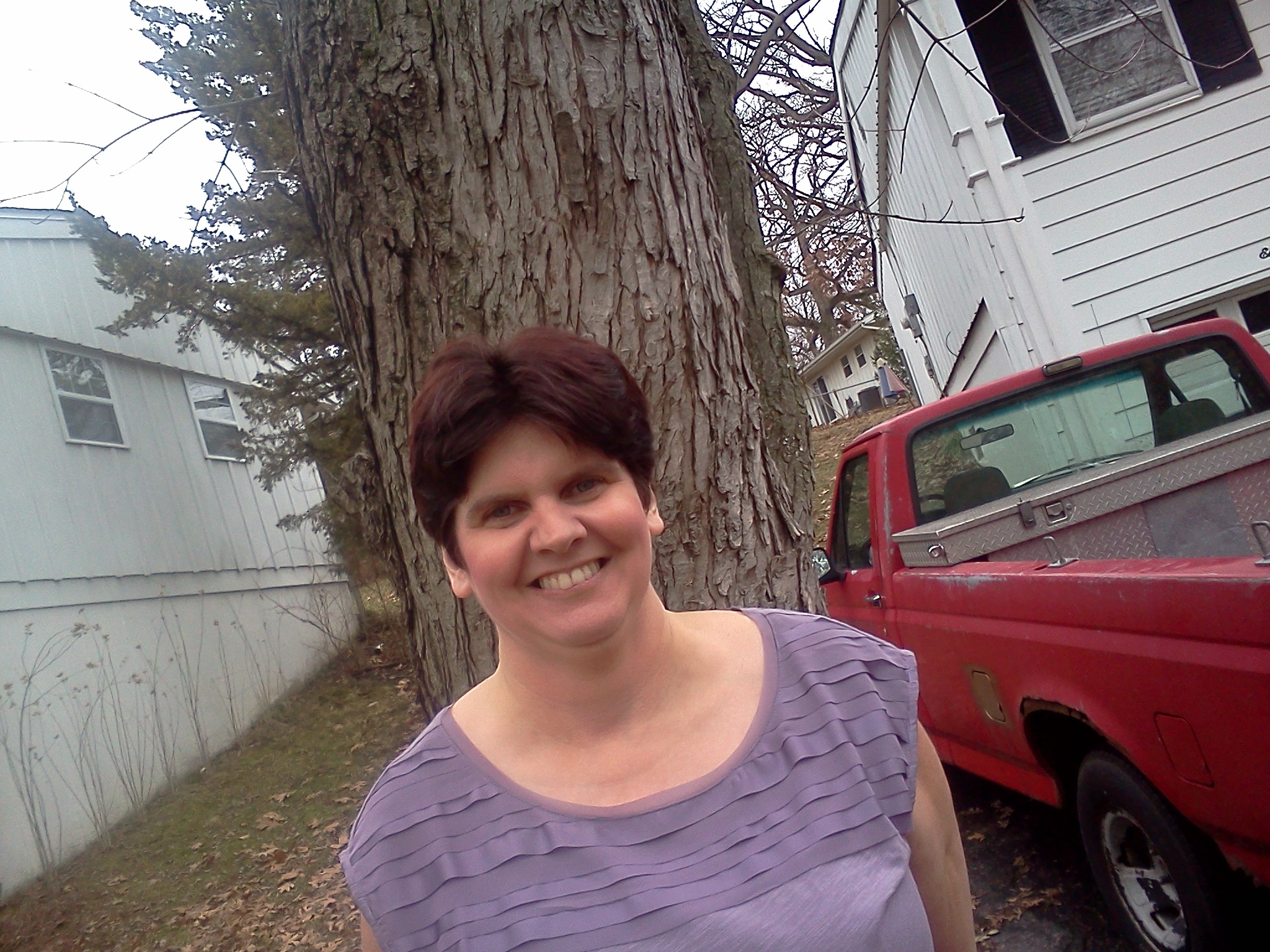
Mom Jessica

When the teeter-totter of life drops you square into a puddle of mud, it’s usually a girlfriend that climbs on the opposite seat and lifts you back up (then helps you shop for new pants). As women we naturally care for and nurture others, and through the sisterhood of girlfriends we give that nurturing back to ourselves.

Today’s author is Jessica Pupillo, freelance writer and editor of St. Louis Sprout & About (www.stlsprout.com).

Healthy Relationships: A Must for Self-Care

Cultivating healthy relationships and eliminating harmful ones is essential to proper self-care.  Whether it’s with a spouse, child, parent, sibling, friend or co-worker, a healthy relationship is one that is characterized by RESPECT- for us and the other person.

This includes:

  1. Courtesy – Be polite. Follow through. Be on time. Avoid shouting, insults, nagging, and manipulation.
  2. Boundaries- It’s okay to set limits, to say “no,” and to expect respect. Honor the other’s personal limits as well.
  3. Personal safety- Violence is NEVER justified or okay. Everyone has a right to be safe from physical and/or emotional abuse.
  4. Honesty- Deception and lies hurt both parties.  The truth always comes to light. Trust is easy to keep but almost impossible to repair.
  5. Clear communication- Say what you mean. Don’t expect others to read your mind. If you are unsure about what someone means, ask questions.
  6. Realistic expectations- Consider the other person’s role and the limits of that role.  Don’t expect the same intimacy from co-workers as spouses.  Even if the other person doesn’t like what’s said, we are each responsible for our own happiness. 
  7. Flexibility and understanding- Plans change. People disappoint. Life is a moving target.  Learn to adapt and adjust.
  8. Grace- No one is perfect. Sometimes we have to forgive and overlook shortcomings.  Other times, we must ask for forgiveness.
Mommie Kate


Good relationships (including with ourselves) are treasures. They must be nurtured.  Make time for them. Cherish them. Enjoy them.

Today’s author is Mommie Kate.  Visit her at http://faith4moms.blogspot.com/.

It’s Okay to Speak Up to Your Children, Too!

In my grandmother’s generation, “children were to be seen but not heard.”  Only parents/adults deserved respect.  Next, parents learned to “listen so their children/teens would talk,” but still expected respect from them.  Today, it seems that many children and teens openly disrespect their parents, and we allow it.

What’s happened?  When did we start worrying more about our children’s love and approval than teaching them to be considerate and thoughtful?  A few months ago one mom told me that she was so hurt by her three year-old yelling at her “I hate you,” she collapsed in a puddle on the floor.   Another mom related how her 10 year-old screamed at her for opening the room to her door without knocking so she apologized.  The problem is not that these situations occur, but that we don’t assert ourselves and use reasonable consequences because we’re afraid of how our children will respond. 

Like all moms, I know how hard it is to speak up and enforce limits.  But I learned that although I felt bad , it was more it was more important to teach my daughters  RESPECT than be their friend or fear their disapproval.  I treated them respectfully and expected the same.

When my younger daughter yelled at me, I warned her once and sent her to her room.  When my older daughter wouldn’t listen, we didn’t go to the mall that day.  While they didn’t like it then, now they value respect, consideration and courtesy in their relationships.  We joke about my younger daughter running from me saying, “No more consequences.”

SPEAK UP.  It works.

January:The Journey of Self-Care Begins

This month we’ve talked about how to make self-care changes which will stick, and how to appreciate the blessings of everyday life which is self-care in practice. While we’ve heard these ideas before, it’s “doing” them that’s challenging.

To summarize what we’ve said about making self-care part of  our daily routine:

  1.  Set small attainable goals, like 15 minutes a day.
  2.  Break the change into smaller steps.
  3.  Make it part of what’s already in the schedule.  Mommie Kate had some great advice on this.
  4.  Intend/visualize what we want to happen.
  5.  Don’t become self-critical of missteps.  Learn from the experience and try again.
  6.  Have a positive attitude about self-care.  Remember it’s a choice.
  7. Self-care and self-love gives us the energy to love others.  As Laura Nash said, “You can’t give what you don’t possess.”  

Now, for the big picture.  Self-care is not just a set of skills we practice, it’s an attitude for how we view and approach our lives.  With all life’s ups and downs, even in a single 24 hours, there’s much to be appreciated.  Often it’s in the small things-sunshine, our children’s smiles, flowers budding in spring or a kind word.  When we put our attention on life’s abundance, we feel loved and cared for. 

Buddha said, “If we could see the miracle of a single flower, our whole life would change.”  Embrace this year with wonder and positive intention.  Be grateful for all that is and all that is yet to be.  Self-care is a path to health, happiness and awakening the soul.  Let’s journey well together.